UX Design by Daniel Salomon
My goal? To understand and represent my users’ needs in my organisation and make sure that our software fits those needs.
How? By talking to users, conducting research, analyzing data, creating accurate personas, mapping the user’s journeys and ultimately create, prototype and validate beautiful & effortless designs.
Design methodology
✳︎
User research
✳︎
Usability testing
✳︎
Figma (design & prototyping)
✳︎
AI prototyping
✳︎
Atomic design system management
Design methodology ✳︎ User research ✳︎ Usability testing ✳︎ Figma (design & prototyping) ✳︎ AI prototyping ✳︎ Atomic design system management

CashWeb mobile app
A modern way to interact with a complex SaaS bookkeeping product, designed for users with specific persona’s.
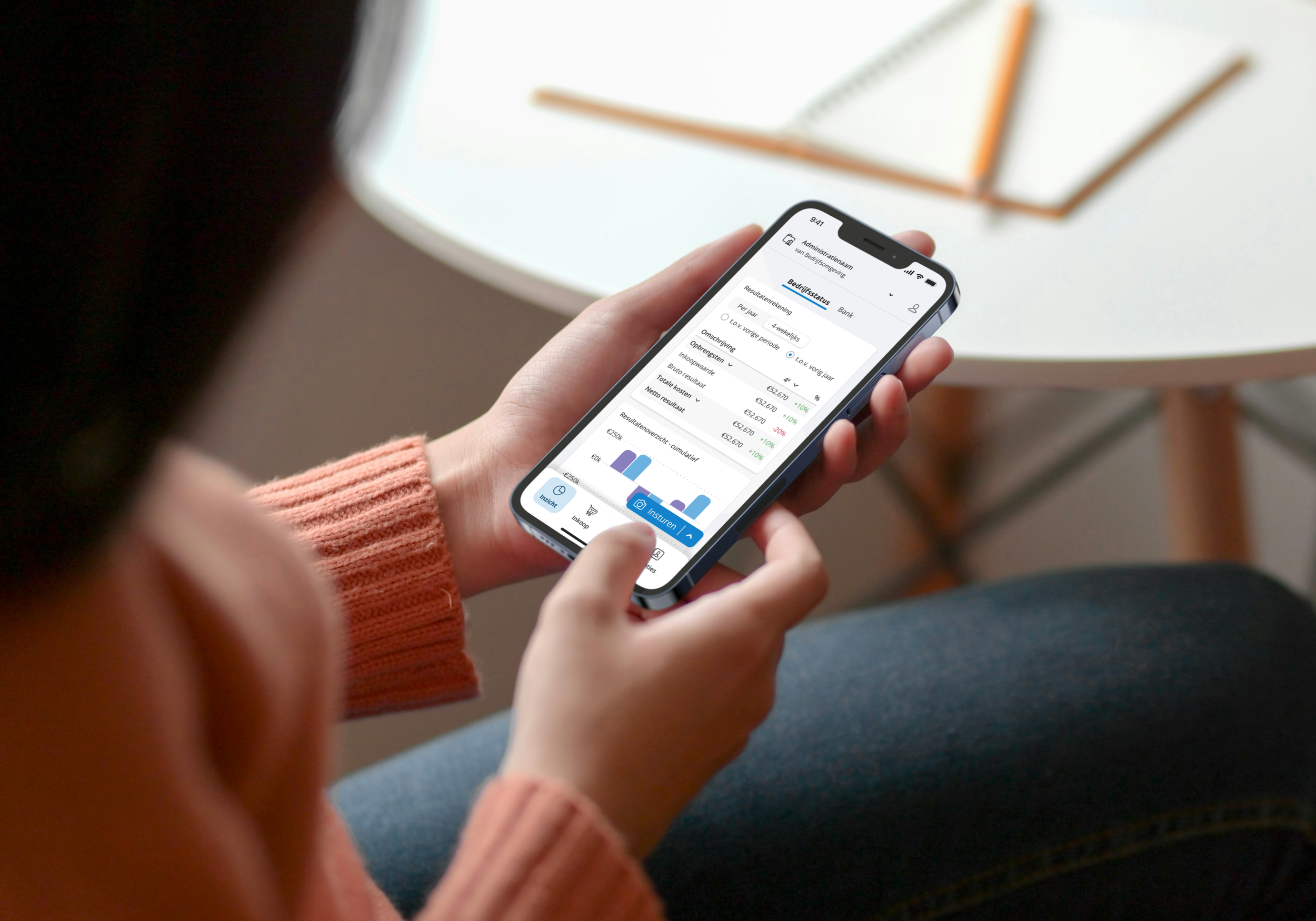
Full redesign based of an outdated existing app, based on user research and a new design system.
Design validated through extensive unmoderated usability testing and a pre-launch pilot with ca. 50 users over the course of 3 weeks.
Hundreds of active users on Android & iOS (smartphone & tablet).
Roadmap of improvements and additions based on user feedback & Firebase user analytics data
Some defining features…
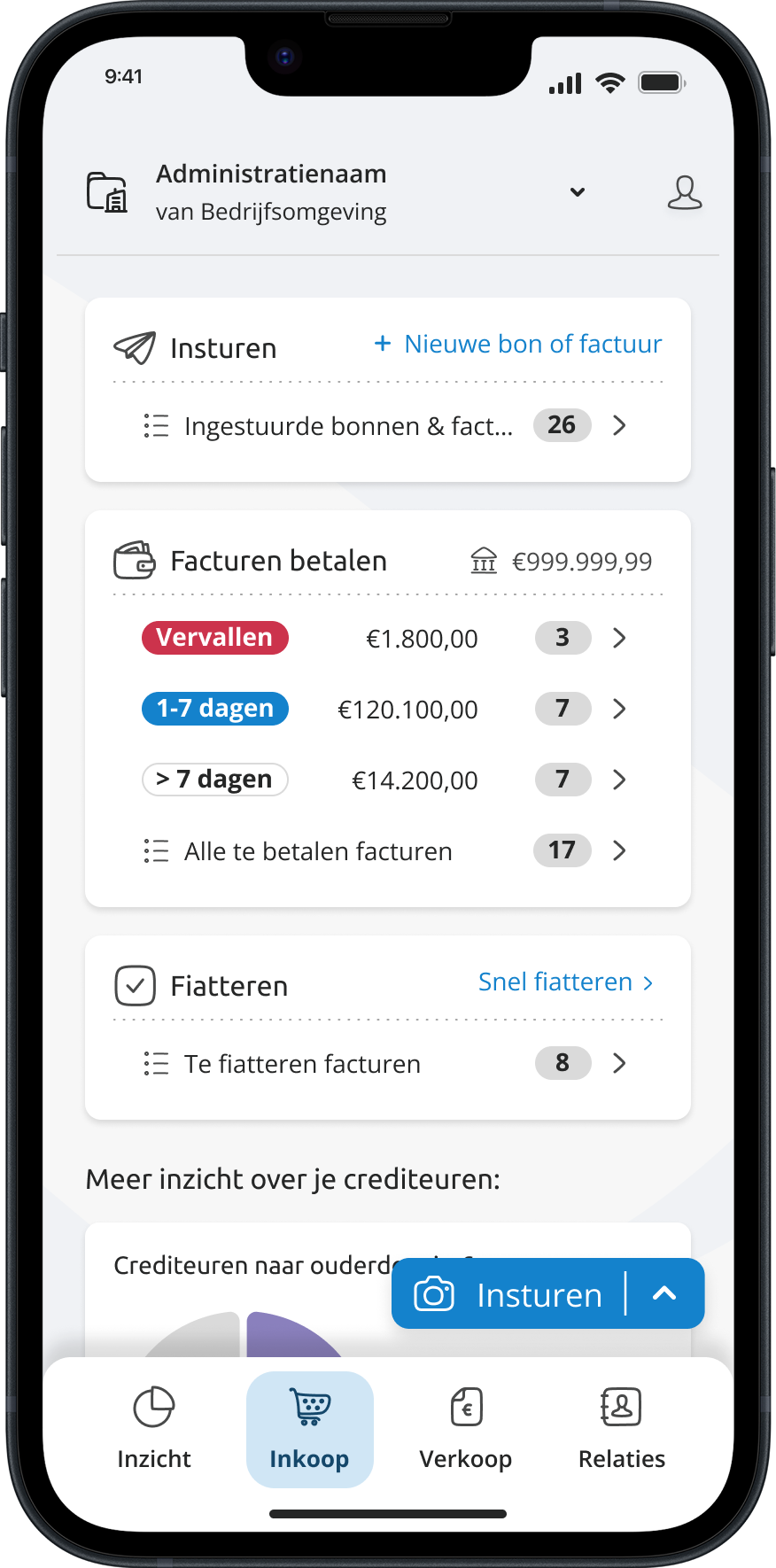
Main features are grouped into 4 home page tabs that matches the expected user personas.
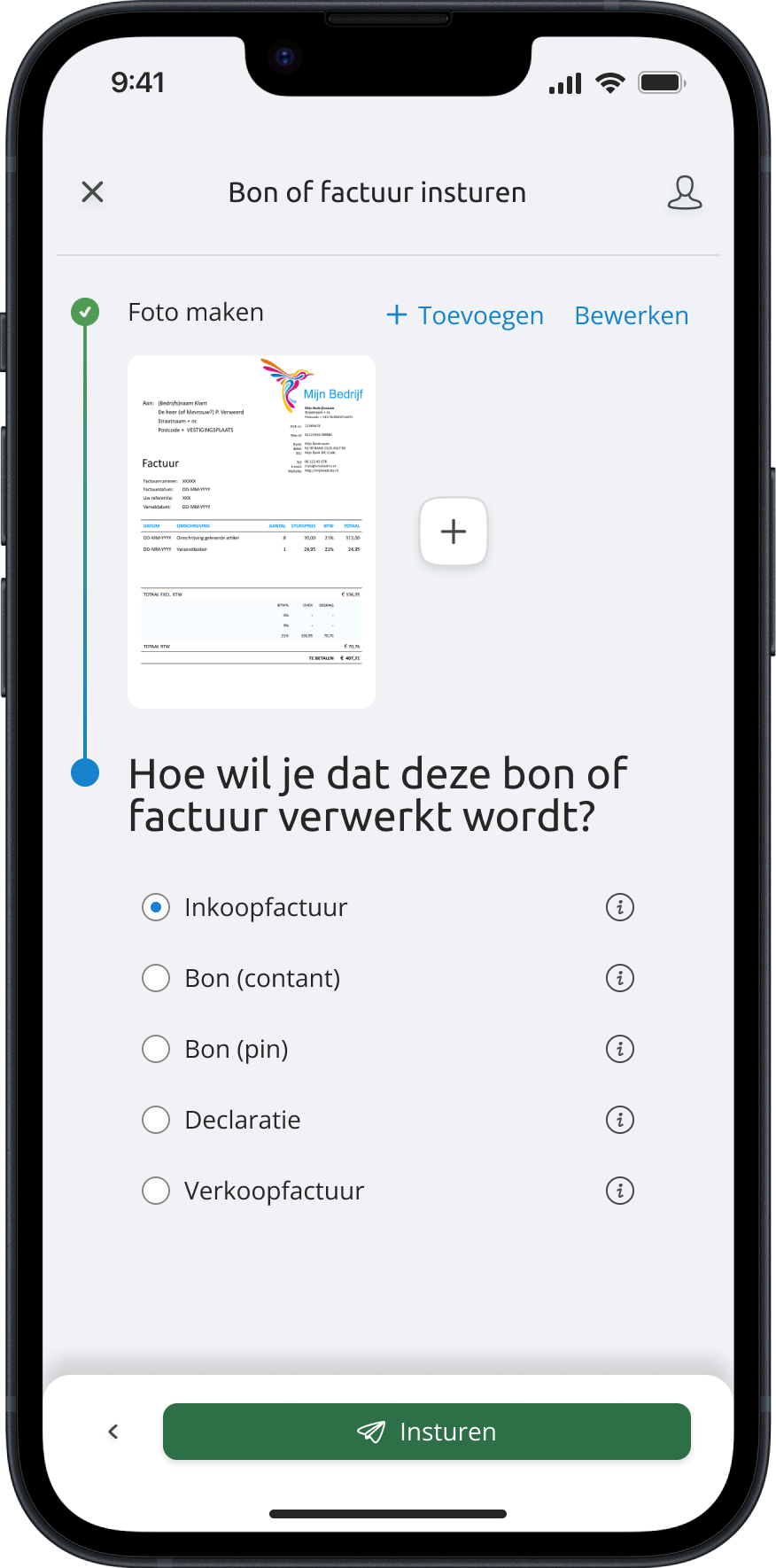
The main user flows of the app were designed as multi-step processes, with one clear task per step.
About the process…
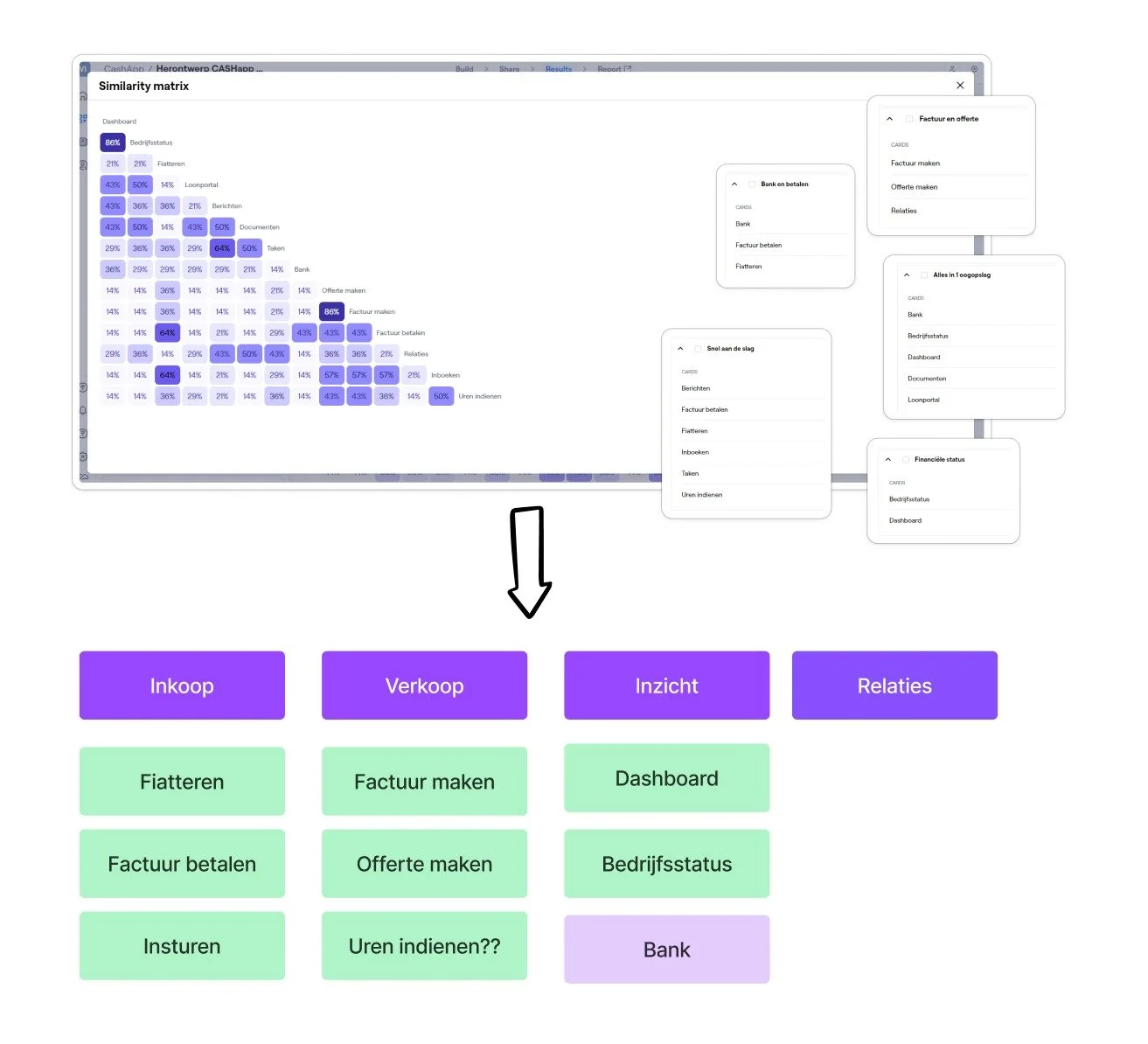
Card sorting exercise to discover which features users associate with each other to ultimately create a navigation structure
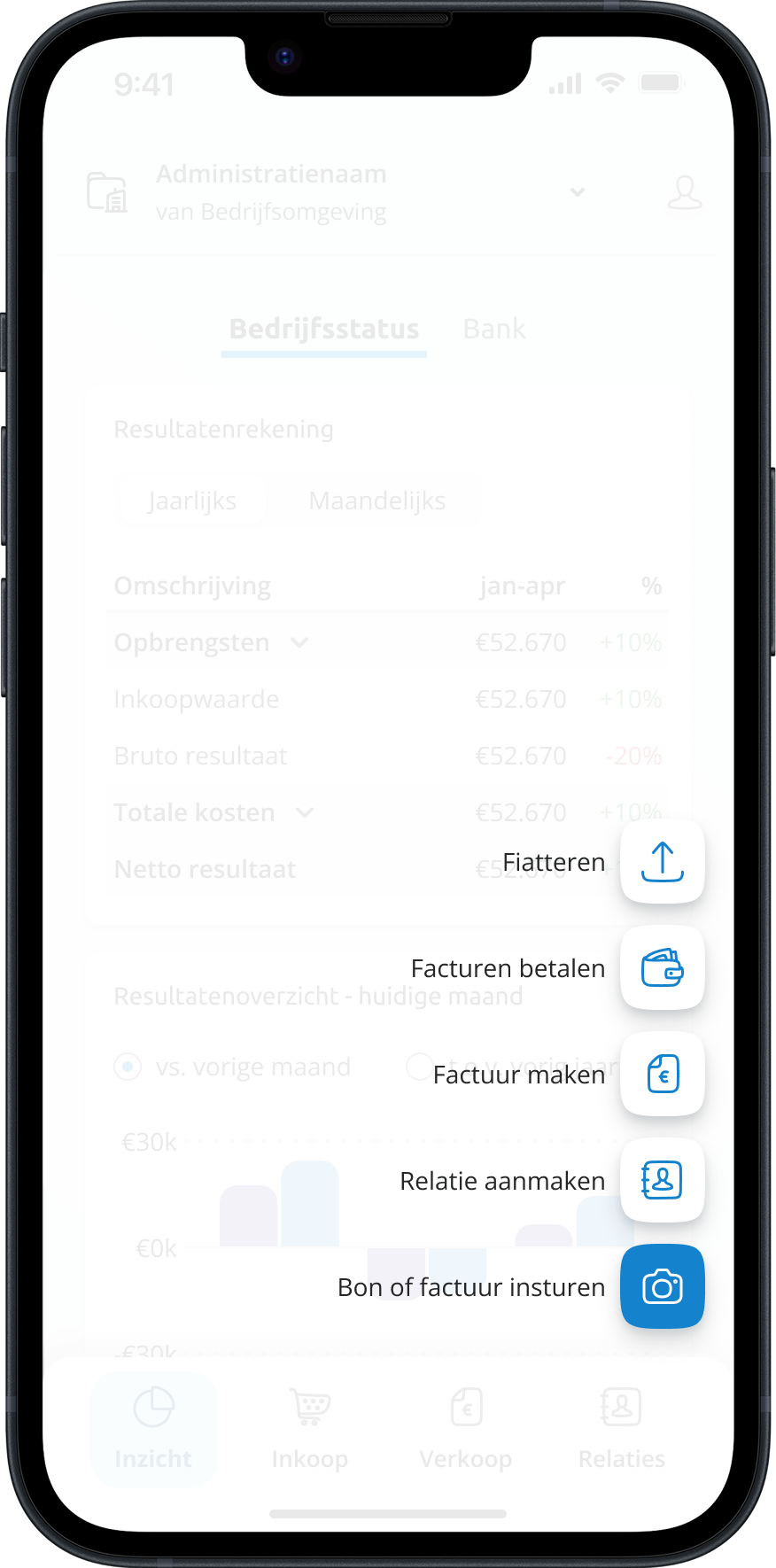
A floating action button allows the user to start the most important flows from every home page.
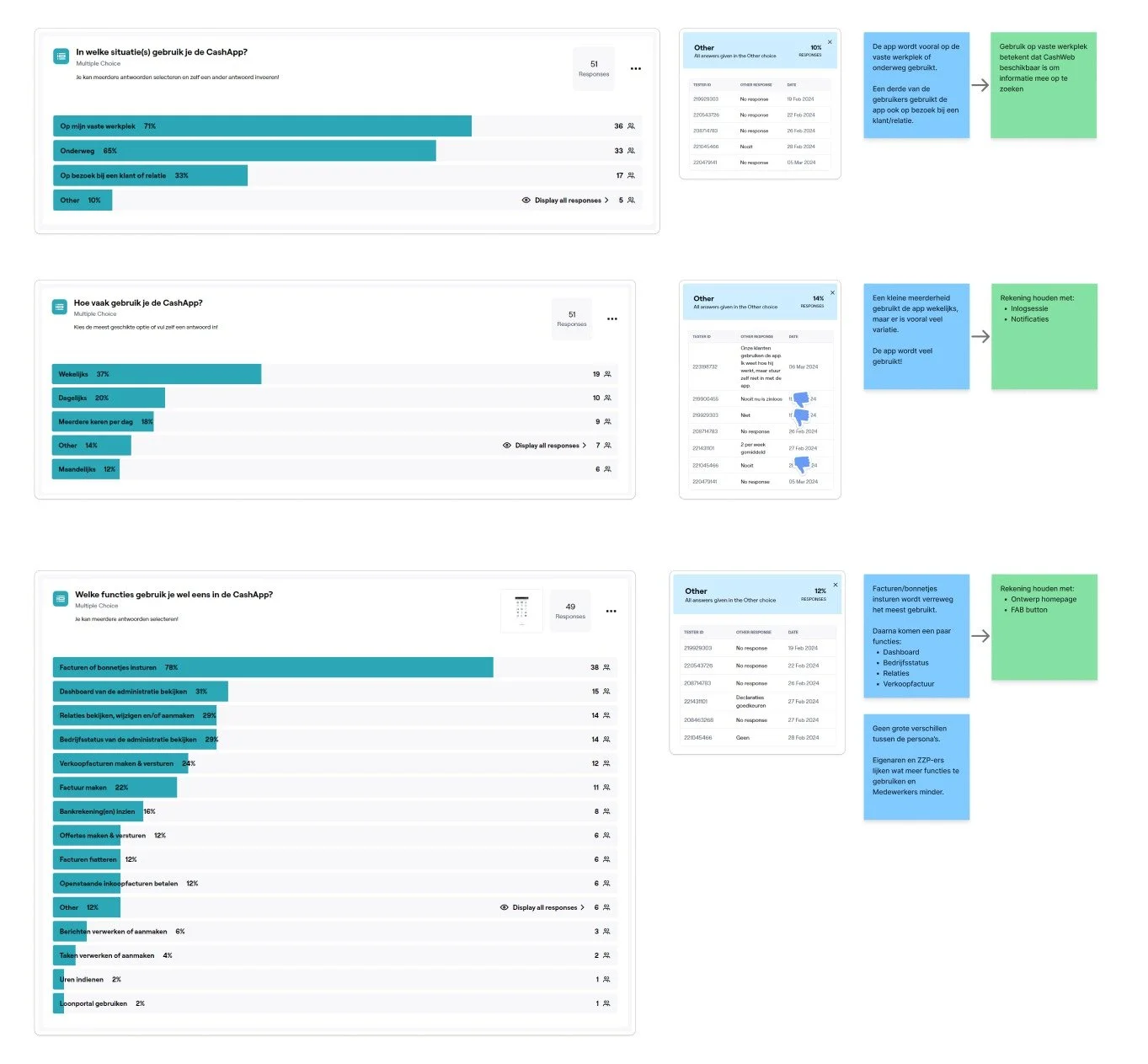
Targeted surveys to understand the current users, their behaviour and their experiences with the current app.
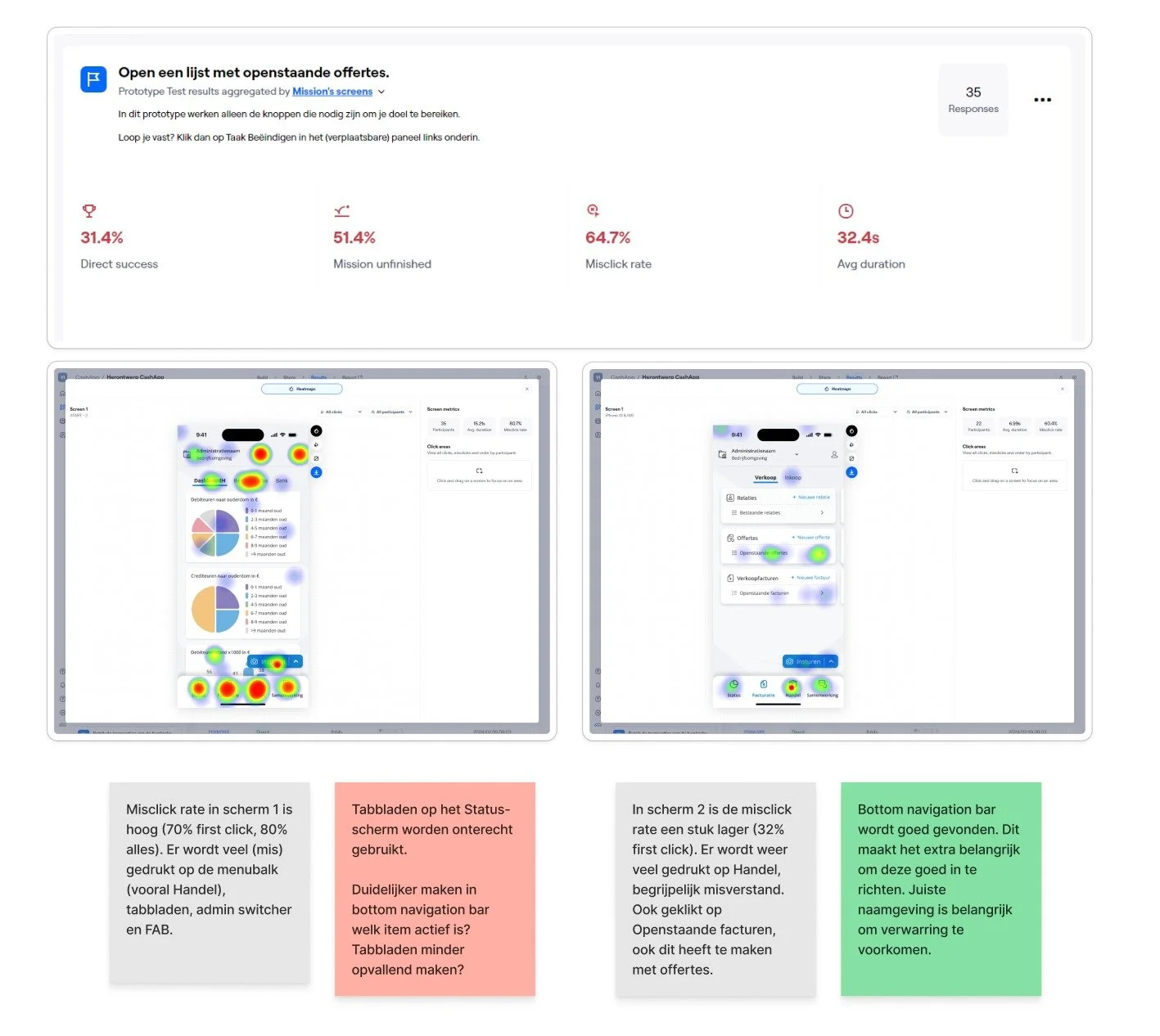
Usability testing (remote) to identify necessary improvements in the first version of the redesign.
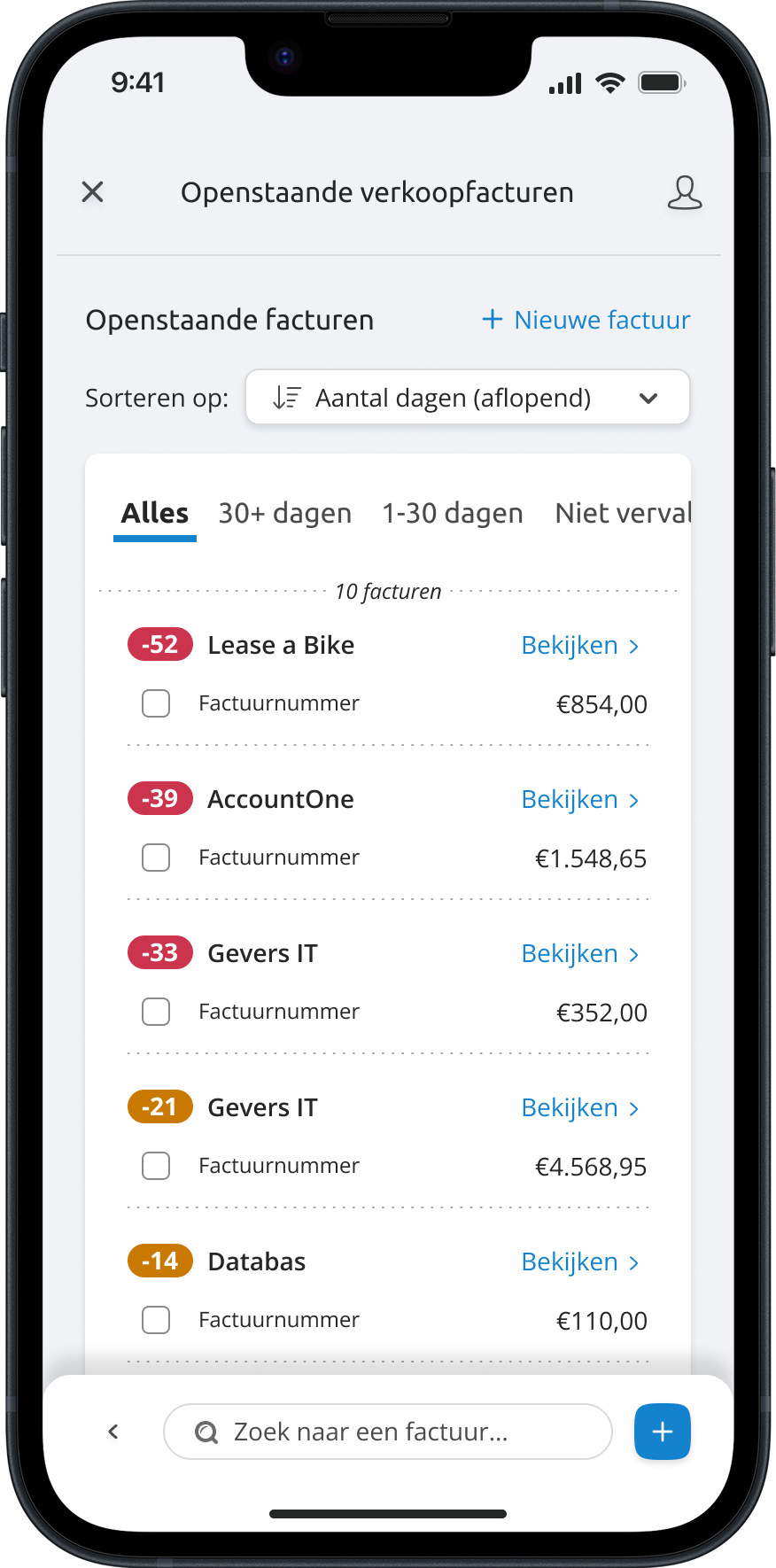
Overviews with only key information, predetermined tabs to filter and easily accessible search & sort elements.
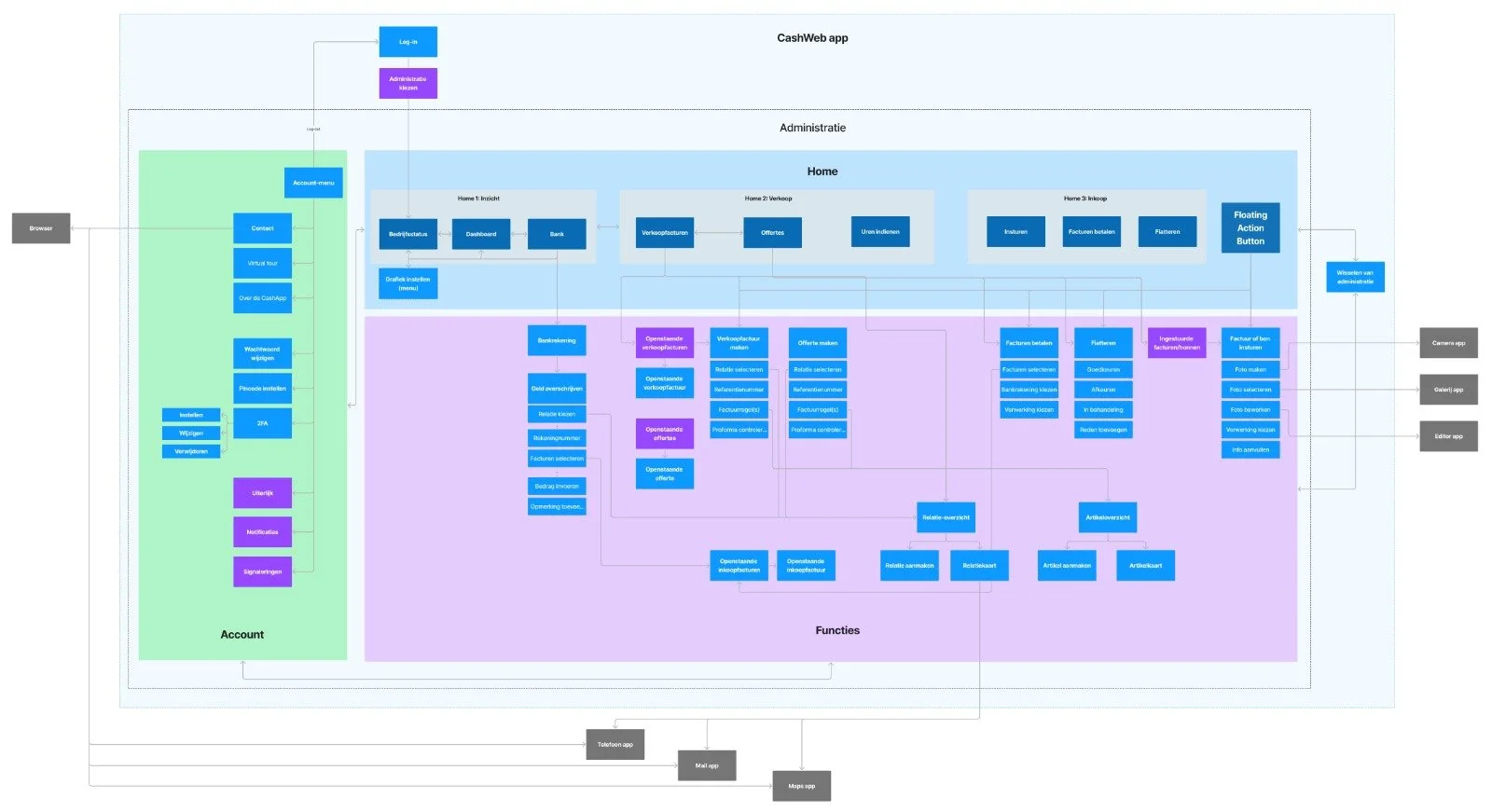
Creating a content map that helped us understand all the relevant screens (and external apps) and the necessary connections between them
CashHero
A complete redesign of a complex, outdated SaaS bookkeeping & accountancy product.
Achievements
Introducing UX design to a 40-year old software company, integrating UX into the agile workflow and convincing stakeholders of the value of UX design and user research.
Creating and managing an atomic web & mobile design system in Figma.
Forming a test panel of dedicated users and conducting various research methods: card soring, surveys and 1-on-1 interviews. Usability testing (moderated & unmoderated via Maze) played a key part in this project to ensure our designs would be adopted by our users.
Improving key user flows by creating & analyzing detailed flow charts, identifying potential issues & improvements and ultimately validating the redesigned flows with users.
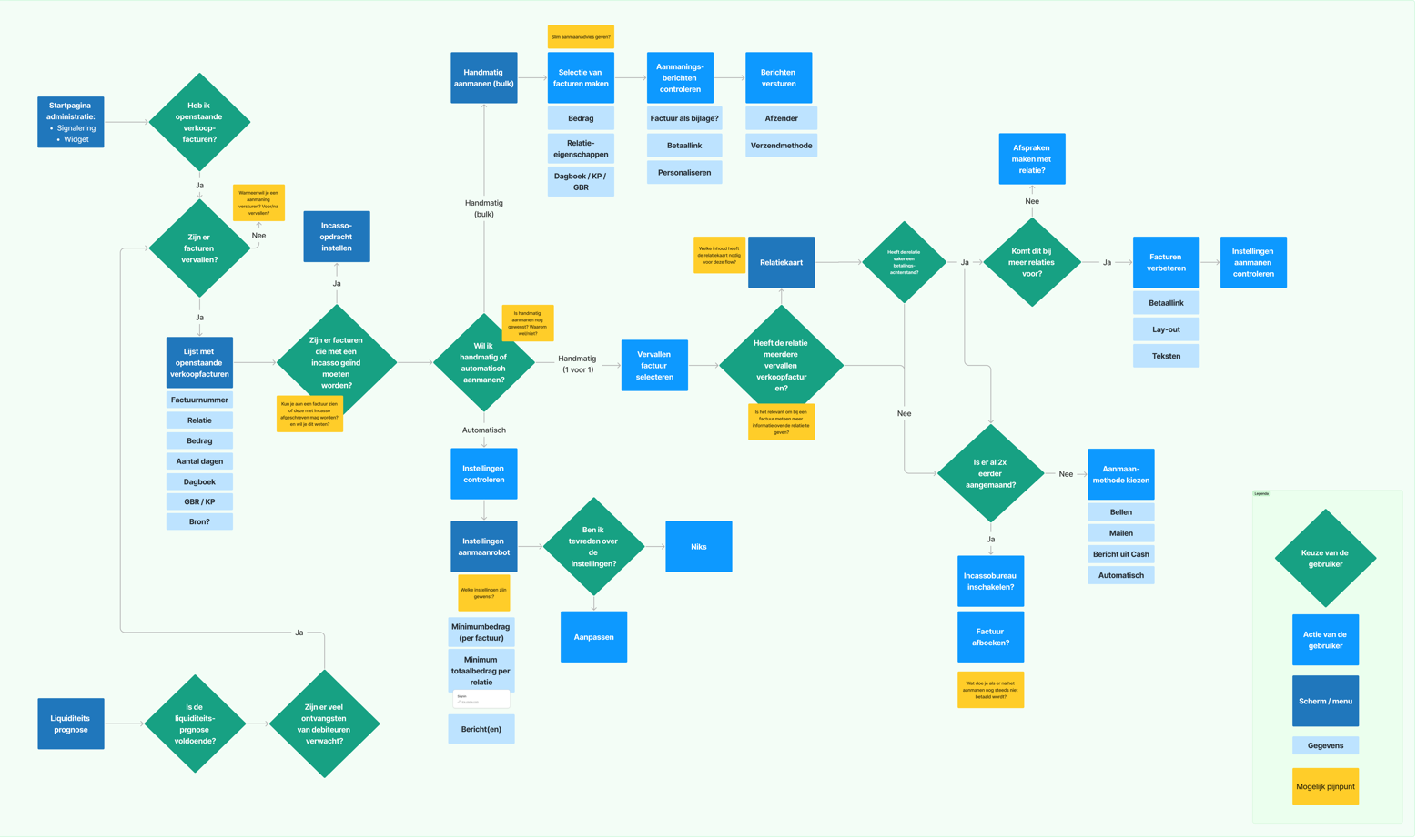
User flow analysis of debtor management in the bookkeeping product.
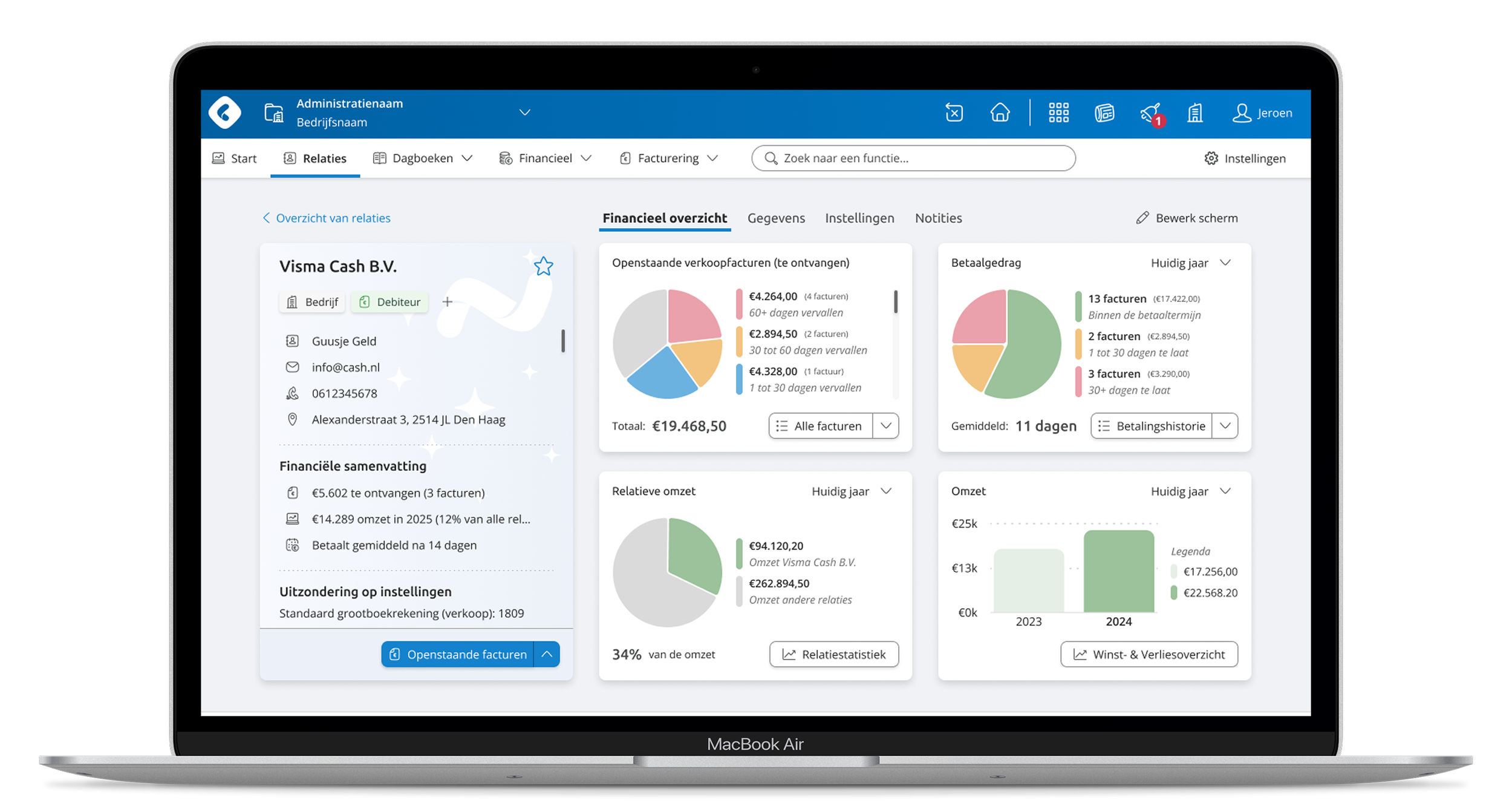
Viewing a contact of your company. Essential information and call-to-action button in a fixed container. Focus on financial insight widgets. Information and settings found in different tabs.
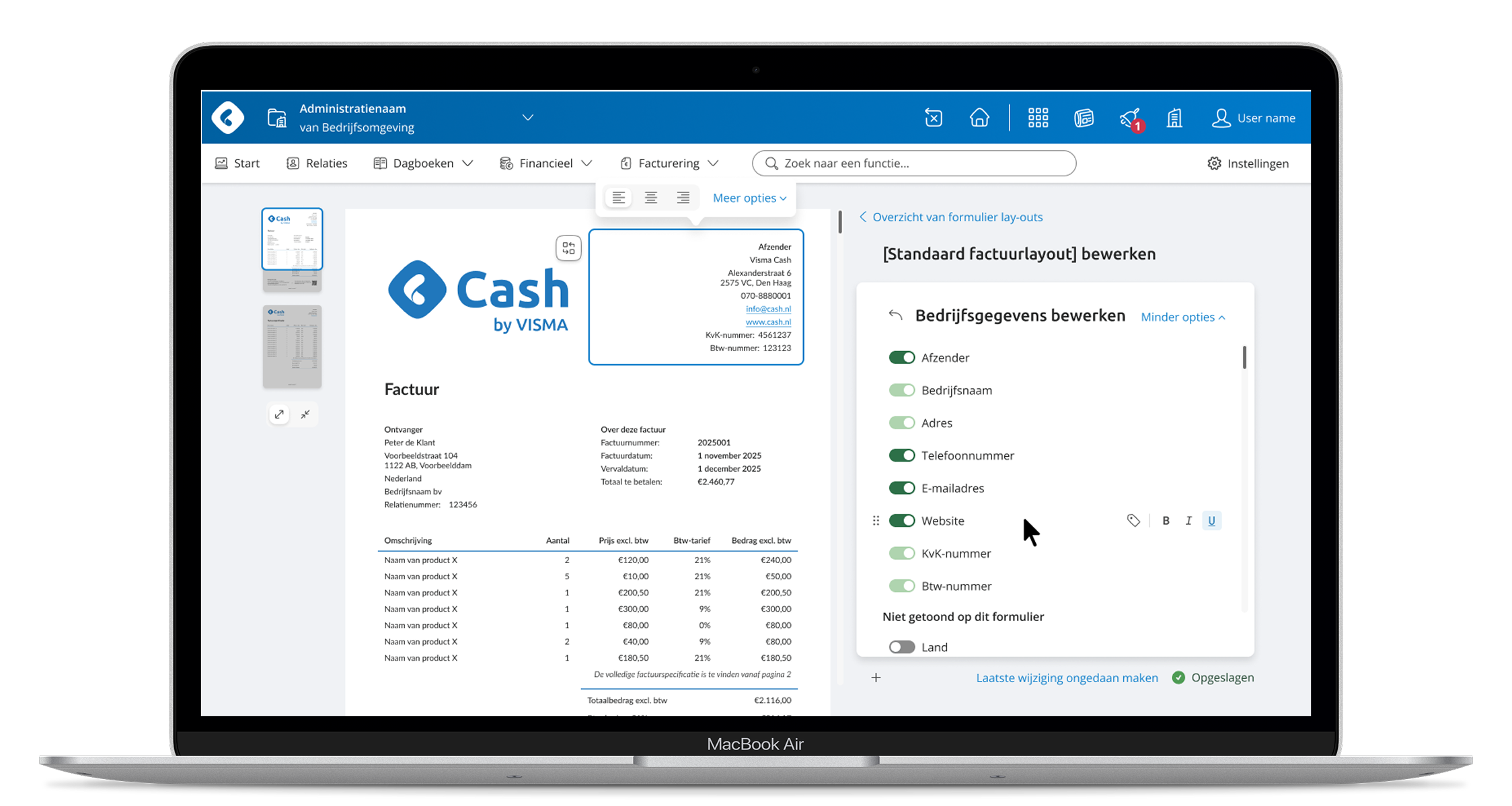
Allowing users to intuitively edit the lay-out of an invoice using WYSIWYG and auto-save.
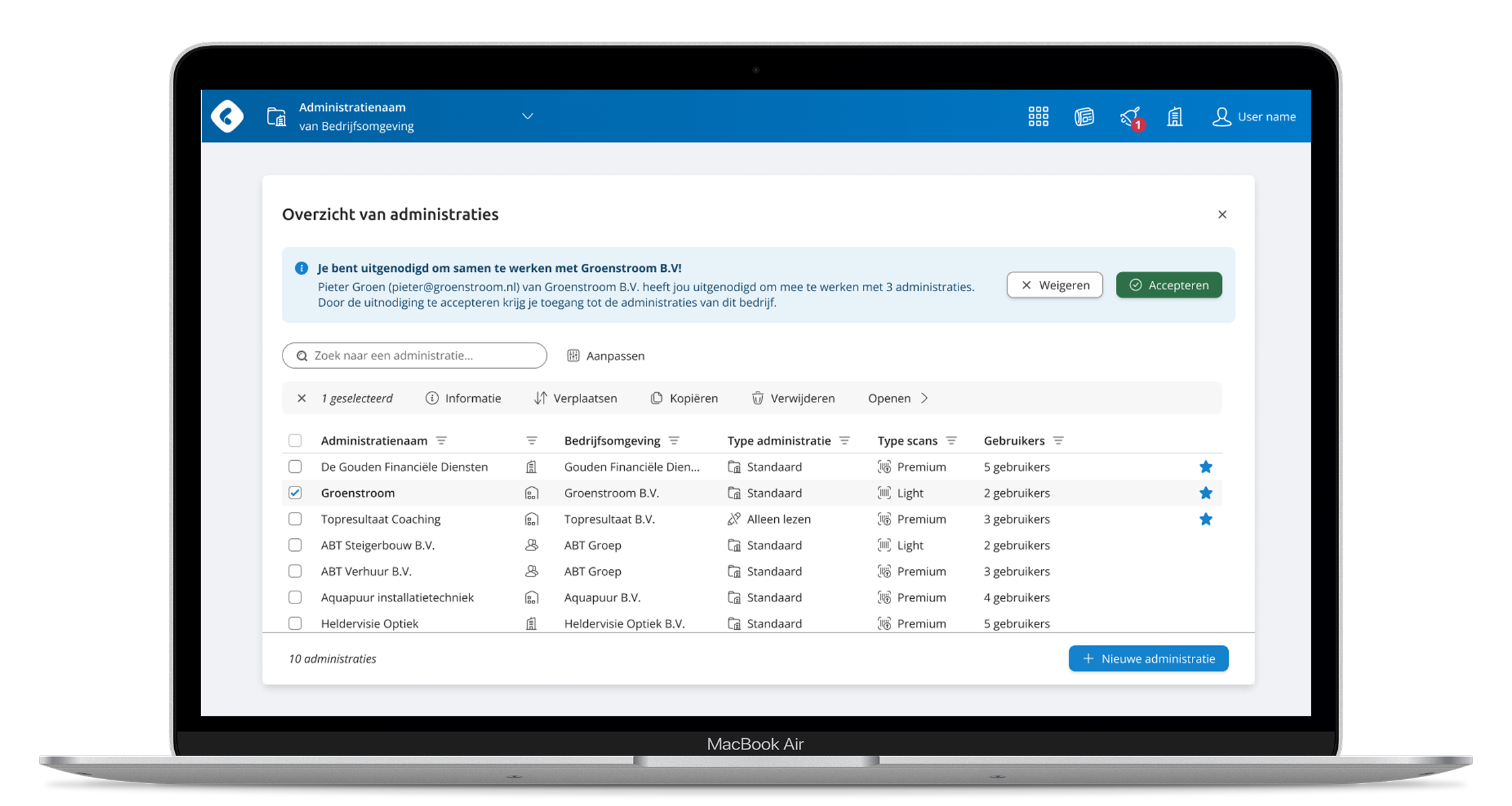
In-line notifications enable accountants to manage the administrations of their existing clients and accept new clients
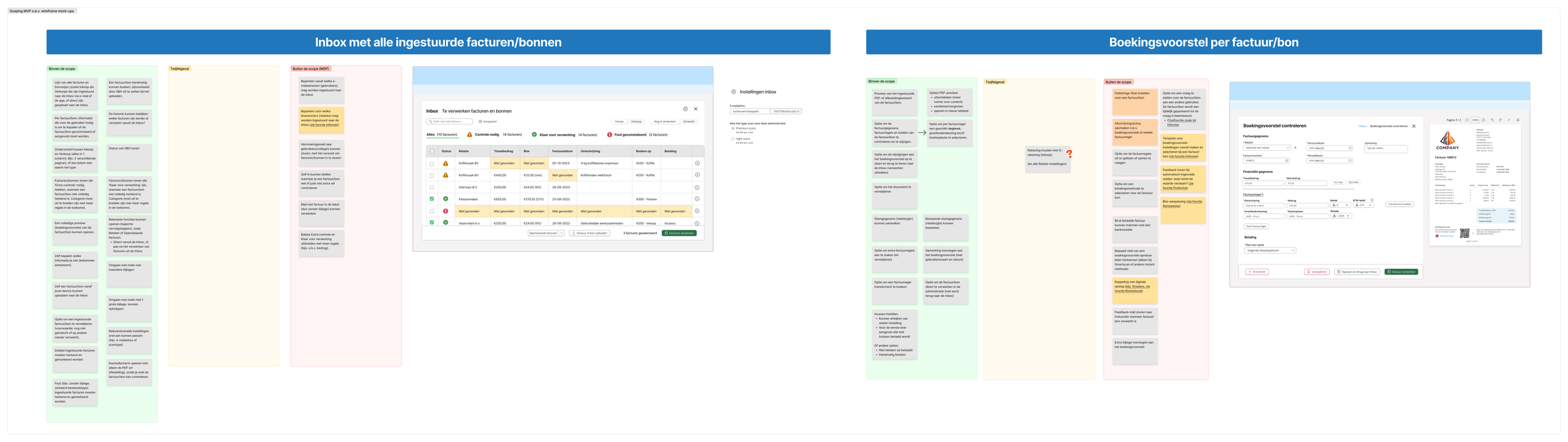
After explorative research and mapping the desired user flow, we created mid-fidelity designs to determine the general lay-out and content of the required screens, but also as a guide to discuss the scope of a features MVP with the product manager.
Engaging with users
A major driver behind the design of CashHero was organizing ‘user days’ in which we facilitated creative group workshops to explore our users’ needs, gathered feedback on designs and presented the applied results of past research.
Not just digital
A few projects from my time as a Industrial Design Engineer student
EvAnt Matchmaker
A nature-inspired improvement of the trade fair matchmaking process
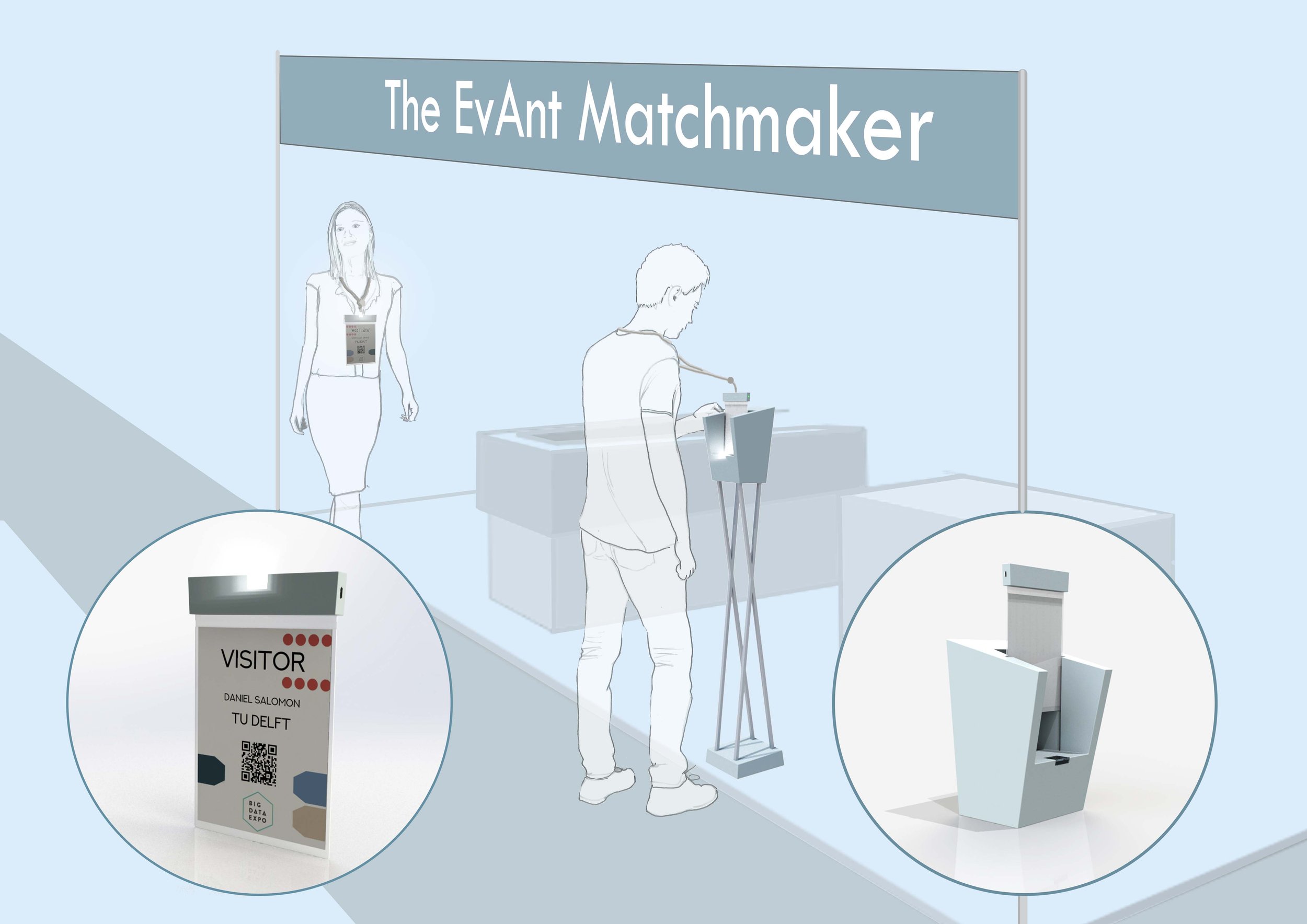
My master's graduation project has lead to the design of the EvAnt Matchmaker. This design can best be described as a self-organizing system of communication in which trade fair visitors receive subtle suggestions on which stands to visit, based on the opinions of previous like-minded visitors. It has been inspired by the pheromone-based communication used by ants in their foraging behaviour.
Ambulance Drone 2.0
Designing for speed of flight and speed of use in stressful situations.
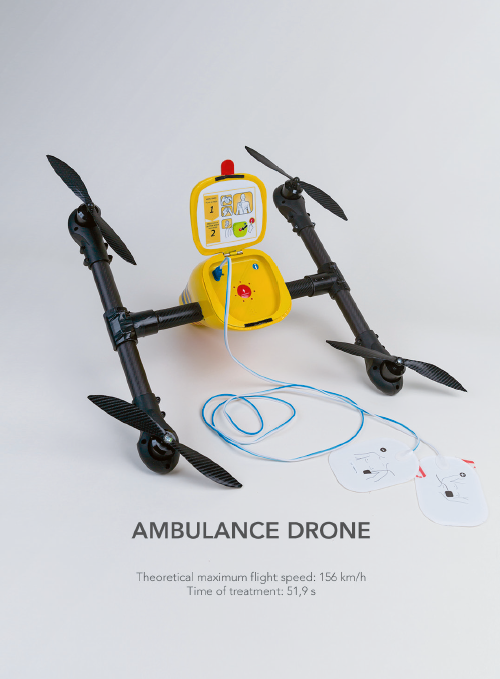
In this project of the Integrated Product Design masters, the goal was to improve the speed and usability of the ambulance drone. We increased usability with a design in which stressed users were presented with one instruction at a time to help them use an AED correctly and quickly in life-threatening situations.
Flight speed was increased is in three ways: an aerodynamic design of the shell, optimized components, and a 70 degree rotation of the drone's body relative to its arms. This last feature had an extra benefit: after the drone has landed, it raises the front of the body (which contains the user interface) upwards: away from the dangerous propellers. It also presents the interface to the user, making it clear where the interaction should begin.
Louise
A dependent social robot in an art museum context
This conceptual social robot, Louise, uses her artificial companionship to trigger people into actively thinking about the way art is made, and therefore more interactively participating in the museum for which she was designed. She presents herself as an autonomous being who wants to enjoy a certain piece of art but who is hindered by her inability to see. Her heightened sense of touch allows visitors to help her by drawing the painting on the back of her head., much like the game in which children guess the object which is drawn on their back.